


What Is the Rubber Extrusion Process? A Complete Industry Overview
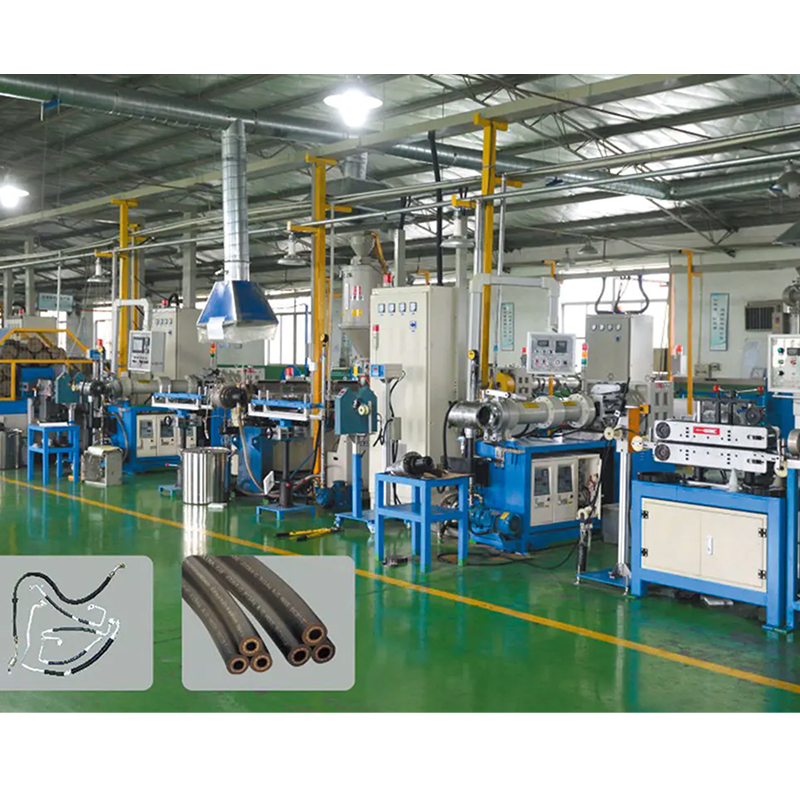
The rubber extrusion process is a continuous manufacturing method in which uncured or compounded rubber is forced through a shaped die under heat and pressure to produce profiles, tubes, cords, seals, and countless other cross-sectional forms. The result is a long, uniform product that can be cut to length, vulcanized, and used across automotive, aerospace, construction, food, and industrial sectors. A modern rubber extrusion production line integrates feeding, plasticating, die-shaping, vulcanization, cooling, and takeoff into a single continuous flow — making it one of the most productive methods in polymer processing.
Unlike compression or injection molding, extrusion is purpose-built for long, constant cross-sections. Tolerances as tight as ±0.1 mm are achievable on high-precision lines, and output rates regularly exceed 20 meters per minute on modern screw extruders. If you need consistent profile geometry at scale, extrusion is almost always the most cost-efficient route.
How the Rubber Extrusion Process Works — Step by Step
Understanding the mechanics behind the rubber extrusion process is essential for anyone specifying equipment, troubleshooting defects, or optimizing throughput. The core sequence on any rubber extrusion production line follows these stages:
Compound Preparation
Raw elastomers — natural rubber (NR), EPDM, silicone, NBR, SBR, neoprene, or others — are mixed with fillers (carbon black, silica), plasticizers, vulcanizing agents, accelerators, and anti-degradants in an internal mixer or open mill. This compound determines hardness, temperature resistance, chemical resistance, and aging behavior. The compound is then formed into strips or pellets for feeding.
Feeding and Plasticating
The compound enters the extruder barrel through a hopper or strip-feed mechanism. A rotating screw — typically with L/D ratios of 10:1 to 16:1 for cold-feed extruders — conveys, compresses, and heats the compound. Cold-feed extruders (the dominant type today) receive unwarmed compound; hot-feed extruders require pre-warming on a mill. Cold-feed systems offer better temperature control and automation.
Die Shaping
The plasticized compound is pushed through a precision-machined die at the barrel head. The die profile determines the cross-section of the extrudate. Die design must account for die swell — the tendency of rubber to expand after leaving the die due to elastic memory — which is material-dependent and can range from 5% to over 30% depending on compound and processing conditions.
Vulcanization (Curing)
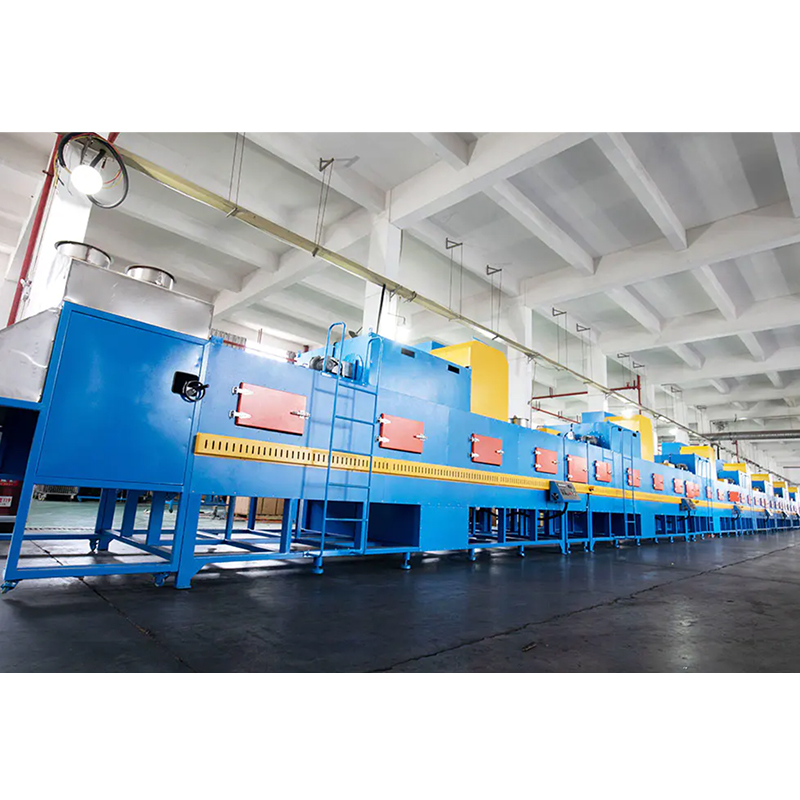
The uncured extrudate must be vulcanized to develop its final mechanical properties. Common methods include: continuous vulcanization (CV) tubes using steam or hot air; microwave (UHF) ovens; salt-bath (LCM) systems; fluidized bed systems; and infrared ovens. Microwave-CV combinations are increasingly popular because they cure the core and surface simultaneously, reducing cure time by up to 60% compared to hot-air alone.
Cooling and Takeoff
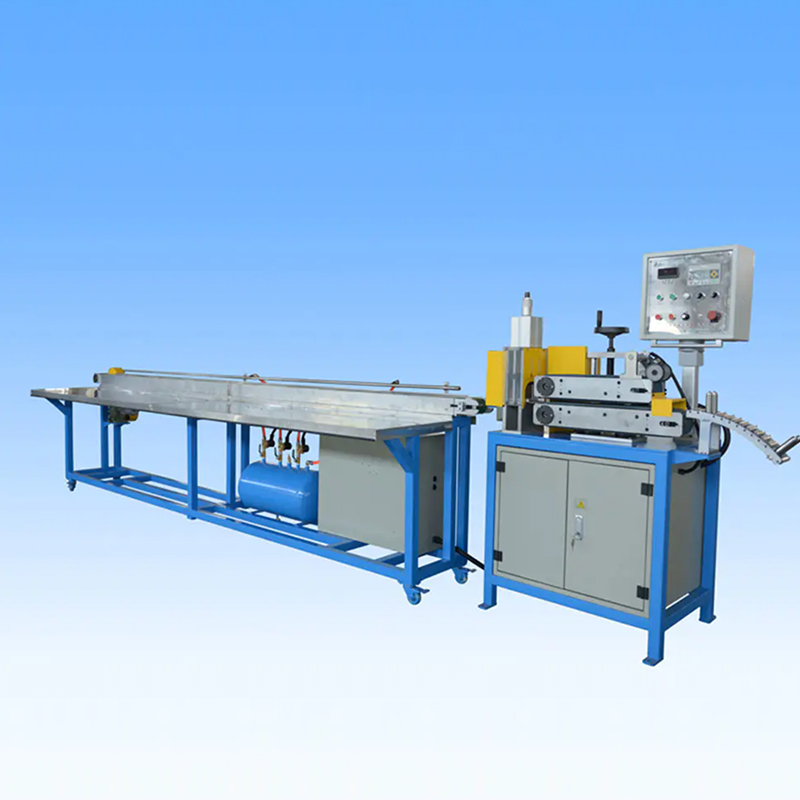
After vulcanization, the profile passes through a water-cooling trough to stabilize dimensions and prevent deformation. A haul-off unit controls linear speed and maintains constant tension — critical for dimensional consistency. Typical cooling-trough lengths range from 3 m to 15 m depending on profile size and line speed.
Cutting and Winding
At the end of the rubber extrusion production line, a flying saw, rotary cutter, or guillotine cuts the profile to specified lengths. Alternatively, a winder collects continuous profiles onto reels for downstream processing. Inline laser gauges or vision systems verify cross-sectional dimensions before takeoff, enabling real-time quality control.
Types of Rubber Extruders Used in Production Lines
Not every rubber extrusion production line uses the same equipment. Extruder type depends on compound viscosity, required output rate, profile complexity, and energy budget. The table below summarizes the main equipment categories:
| Extruder Type | Feed Method | Typical L/D Ratio | Best For | Relative Output |
|---|---|---|---|---|
| Cold-Feed Single Screw | Strip or pellet | 10:1 – 16:1 | General profiles, seals, hose | High |
| Hot-Feed Single Screw | Pre-warmed strip | 4:1 – 6:1 | High-viscosity compounds, older lines | Medium |
| Twin-Screw (Counter-rotating) | Pellet or powder | 20:1 – 40:1 | TPR, TPE, silicone blends | Very High |
| Pin-Barrel Extruder | Strip | 12:1 – 18:1 | Carbon-black-filled compounds, tire tread | High |
| Gear Pump Extruder | Strip or pellet | Varies | High precision, thin-wall profiles | Medium-High |
| Vacuum Vented Extruder | Strip | 14:1 – 20:1 | Degassing moisture-sensitive compounds | High |
Common Rubber Compounds Used in Extrusion and Their Properties
The rubber extrusion process is compatible with a wide range of elastomer families. Selecting the right compound for a rubber extrusion production line depends on the product's service environment — temperature, chemical exposure, UV, ozone, and dynamic loading all play a role.
EPDM (Ethylene Propylene Diene Monomer)
The most widely extruded rubber in the automotive weatherstrip and building-seal market. EPDM offers outstanding ozone and UV resistance, a service temperature range of −50°C to +150°C, and excellent water resistance. According to market data from Grand View Research (2023), EPDM accounted for over 35% of global rubber extrusion consumption by volume.
NBR (Nitrile Butadiene Rubber)
The go-to compound when oil and fuel resistance is required — used in hoses, O-ring cord, fuel-system seals, and pump components. Acrylonitrile content (18–50%) directly governs oil resistance versus low-temperature flexibility trade-off. NBR extrudates maintain integrity at temperatures up to +120°C in oil environments.
Silicone (VMQ / PVMQ)
Silicone extrusions are valued for their extreme temperature range (−60°C to +230°C), biocompatibility, and electrical insulation. They are widely used in medical tubing, food-contact seals, aerospace gaskets, and high-voltage cable insulation. Silicone requires post-extrusion vulcanization at elevated temperatures (typically 200°C+ in a hot-air oven or CV line).
Natural Rubber (NR)
Natural rubber delivers the highest tensile strength and tear resistance of any commodity elastomer — up to 30 MPa in gum compounds. It is preferred for dock fenders, anti-vibration mounts, conveyor belting, and high-dynamic-load applications. Limitations include poor ozone and oil resistance, addressed by compound design.
Neoprene (Chloroprene Rubber, CR)
Neoprene offers a balanced profile of moderate oil resistance, good weather resistance, and inherent flame retardancy, making it a standard choice for marine applications, cable jacketing, and general industrial profiles. Service range: −35°C to +120°C.
FKM (Fluoroelastomer / Viton)
FKM is specified for the most demanding chemical, fuel, and high-temperature environments — continuous service up to +200°C, with resistance to fuels, hydraulic fluids, solvents, and concentrated acids. The material commands a premium price but is irreplaceable in aerospace, semiconductor, and chemical processing seals.
Vulcanization Methods on a Rubber Extrusion Production Line
Curing is the most energy-intensive and time-sensitive step in the rubber extrusion process. The right curing method depends on compound type, profile geometry, and required line speed. Here is a detailed comparison of the main approaches used on industrial rubber extrusion production lines:
A pressurized steam tube (autoclave-like) is positioned directly after the die. Steam at pressures of 5–15 bar (corresponding to ~160–200°C) cures the extrudate as it passes through. It is the most established method, widely used for EPDM weather seals and hose. The limitation is that the steam condensate can mar smooth-surface profiles.
Microwave energy at 915 MHz or 2450 MHz heats polar rubber compounds volumetrically — from the inside out — enabling far faster cure than surface-heated methods. A microwave oven is typically combined with a hot-air post-cure tunnel. Carbon-black-filled compounds absorb microwave energy especially well. Cure time reductions of 40–60% versus steam alone are commonly reported (source: Rubber Technology International).
A molten salt bath (liquid cure medium) at 180–220°C provides uniform, rapid heat transfer and is suitable for profiles where surface appearance is critical. The salt must be thoroughly cleaned from the profile surface. LCM baths are used for high-precision automotive seals and complex co-extruded profiles.
Convective hot-air ovens offer the gentlest cure and are preferred for foam rubber, sponge profiles, and large cross-sections where internal steam or salt contamination would be problematic. Oven temperatures range from 200–280°C. Cure speed is slower; tunnel lengths of 20–50 m are common on high-output lines.
A bed of fine glass or quartz beads, fluidized by hot air, envelops the extrudate and provides very even heat transfer. It is particularly suitable for irregular cross-sections and co-extruded sponge/solid combinations. The medium adheres to the profile surface and must be removed before takeoff.
Infrared cure is used as a surface pre-cure stage combined with other methods, or for very thin profiles. UV curing applies to specific UV-reactive compounds and is most common in thin-film or specialty medical applications. Both allow very compact line footprints.
Key Industries and Applications of Rubber Extrusion Production Lines
Rubber extrusion products touch virtually every major industry. The following breakdown illustrates the breadth of applications enabled by the rubber extrusion process:
Automotive
- Door, window, trunk, and hood weatherstrips (primarily EPDM)
- Cooling-system hose, turbo hose, intercooler ducting
- Fuel and brake-line protective sleeving
- Anti-vibration profiles and body-on-frame seals
- EV battery module perimeter seals
Automotive remains the largest single end-use market for rubber extrusion. A single passenger vehicle can contain over 200 meters of extruded rubber profiles (source: International Rubber Study Group).
Construction and Architecture
- Curtain wall glazing seals and structural glazing tape
- Expansion joint profiles for bridges and tunnels
- Waterproof membranes and roof-edge flashing
- Door and window frame sealing strips
Medical and Pharmaceutical
- Silicone tubing for peristaltic pumps, IV sets, and drainage systems
- Catheter and endoscope channel sleeves
- Pharmaceutical stoppers and gaskets (USP Class VI silicone)
- Continuous glucose monitor sealing profiles
Industrial and Energy
- Cable jacketing and electrical insulation sleeves
- Hydraulic and pneumatic hose extrusions
- Conveyor belt edge trim and guide rails
- Offshore oil/gas seal profiles in FKM or HNBR
- Wind turbine blade root sealing profiles
Rail and Transportation
- Rail fastening pads and baseplate insulators
- Passenger coach door seals
- Aircraft cabin window seals and door perimeter profiles
Food and Beverage
- Food-grade silicone and EPDM door gaskets for refrigeration units
- Conveyor belt sealing strips in food-processing lines
- Dairy and beverage hose (FDA-compliant compounds)
Quality Control in the Rubber Extrusion Process
Modern rubber extrusion production lines integrate multiple inline and offline quality checks. Tight dimensional control is non-negotiable for sealing applications — a door seal 0.3 mm undersize can allow wind noise and water intrusion; a hose wall 0.2 mm thin may fail under pressure cycling. The following control systems are standard on high-performance lines:
Laser Dimension Gauges
Non-contact laser scanners measure outer diameter (for tubes) or multi-axis cross-section (for profiles) at up to 500 scans per second. Measurement data is fed back to haul-off speed and screw RPM controllers to keep dimensions within spec. Leading gauge suppliers include Zumbach, Sikora, and LaserLinc.
X-Ray Wall-Thickness Measurement
For reinforced hose and multi-layer profiles, X-ray gauges measure individual layer thicknesses — critical for hydraulic hose where inner-tube wall thickness determines burst pressure rating (e.g., SAE 100R standards require wall tolerance within ±0.2 mm).
Inline Hardness Testing
Rebound-hammer or microwave-based systems estimate Shore hardness of the cured extrudate inline, flagging under-cure (soft product) or over-cure (brittle, surface bloom) conditions before the defective product advances further down the line.
Vision Systems
High-resolution cameras with AI-based image analysis detect surface defects — pits, blisters, tears, extraneous inclusions — at line speed. Systems from companies such as Cognex and Keyence can reliably detect defects as small as 0.1 mm².
Cure State Monitoring
Microwave resonance sensors or NIR spectroscopy estimate the crosslink density of the cured compound inline — ensuring the vulcanization zone operates within optimal temperature and dwell-time parameters throughout the shift.
Statistical Process Control (SPC)
Modern rubber extrusion production lines log all process parameters — barrel temperatures, screw speed, head pressure, haul-off speed, cure zone temperatures — and apply SPC analysis. Process capability indices (Cpk) above 1.33 are the standard acceptance threshold for automotive suppliers.
Common Defects in Rubber Extrusion and How to Prevent Them
Even a well-configured rubber extrusion production line can produce defective parts when compound, machine, or process parameters drift out of optimal range. Below are the most common issues and their root causes:
| Defect | Appearance | Root Cause | Prevention / Remedy |
|---|---|---|---|
| Surface Roughness / Sharkskin | Matte, rippled surface | Excessive shear rate at die land; compound too stiff | Reduce screw speed; increase compound temperature; adjust die geometry |
| Dimensional Variation | Inconsistent cross-section | Haul-off speed instability; feed rate fluctuation | Install closed-loop laser gauge; inspect drive and feed system |
| Blistering / Porosity | Voids or bubbles in cross-section | Moisture in compound; trapped air; volatile plasticizers | Dry compound before processing; increase screw back-pressure; add vacuum vent |
| Cure Bloom | White or grey surface powder | Accelerator or sulfur migration (over-cure or incorrect formulation) | Review accelerator system; lower cure temperature or reduce cure time |
| Die Lip Buildup | Material accumulation at die exit | Degraded compound, scorching at die | Reduce die temperature; check scorch safety of compound; clean die more frequently |
| Warping / Bow | Profile curves laterally or twists | Asymmetric flow through die; uneven cooling | Balance die flow channels; ensure symmetric cooling trough entry |
Critical Process Parameters for Optimizing a Rubber Extrusion Production Line
Running a rubber extrusion production line at peak performance requires tight management of interdependent variables. Changing one parameter without compensating elsewhere is a common source of quality problems. The following parameters deserve continuous attention:
Most cold-feed extruders divide the barrel into three to five independently controlled zones. A typical EPDM line might run Zone 1 (feed zone) at 40–60°C, rising to 80–90°C at the metering zone, with the head and die at 100–120°C. Too low, and viscosity is excessive; too high, and scorch risk increases rapidly (Mooney scorch time decreases exponentially above 120°C for sulfur-cured EPDM).
Screw RPM determines shear heat generation and throughput rate. On a 90 mm cold-feed extruder, typical operating RPM for EPDM extrusion ranges from 20–60 RPM, producing output rates of 100–400 kg/h depending on compound density. Higher RPM increases output but also increases compound temperature; operator must balance throughput against scorch margin.
Die pressure — measured by a transducer at the extruder head — is a composite indicator of compound viscosity, screw speed, and die restriction. Typical operating pressures for rubber range from 100–400 bar. Sudden pressure spikes indicate a feeding problem or compound inhomogeneity; a gradual increase often signals compound degradation or die buildup.
The haul-off caterpillar or belt puller controls the draw ratio — the ratio of haul-off speed to extrusion speed. Draw ratios above 1 stretch the extrudate, reducing cross-section dimensions; draw ratios below 1 allow it to accumulate. Precise closed-loop control maintains the draw ratio within ±0.5% on modern lines.
For steam CV lines, steam pressure directly sets temperature. A shortfall in dwell time — caused by running the line faster than the vulcanization zone can handle — produces under-cured product with substandard compression set and tensile strength. Dwell time = cure length ÷ line speed. Increasing line speed without extending the oven is a frequent source of quality failures.
Cooling water temperature and flow rate affect how quickly the hot extrudate stabilizes. Too-rapid quenching can introduce internal stresses; too-slow cooling allows the profile to deform under gravity before it has stiffened. Standard cooling-water temperatures on rubber lines range from 15°C to 40°C.
Co-Extrusion: Running Multiple Compounds on One Production Line
Co-extrusion combines two or more different rubber compounds in a single die to produce composite profiles with distinct zones — for example, a solid EPDM lip bonded to an EPDM sponge bulb in a single-pass operation. This eliminates secondary adhesive bonding steps, reduces labor, and improves adhesion reliability between zones.
A typical automotive weatherstrip co-extrusion production line uses two or three satellite extruders feeding a shared manifold die. Each extruder handles a different compound — commonly: (1) dense EPDM for structural zones, (2) EPDM sponge for sealing bulbs, and (3) a low-friction flocking material or TPE for surface layers. The die design merges the flows so that the compounds bond at the interface inside the die, prior to exit — giving a mechanically integrated cross-section.
Key challenges in co-extrusion:
- Matching viscosities at the die temperature to prevent flow instability at the interface
- Ensuring compatible cure systems between compounds (mismatched cure rates cause delamination)
- Balancing throughput rates between satellite extruders to maintain constant interface position
- Die complexity and cleaning time when changing compound combinations
When co-extrusion is executed correctly, it enables product designs that would be physically impossible with any single-compound process — and typically reduces total manufacturing cost by 15–25% versus two-step bonding approaches.
Selecting Equipment for a Rubber Extrusion Production Line
Specifying a new rubber extrusion production line requires aligning extruder size, vulcanization method, cooling length, and takeoff equipment to the product mix and required output rate. The following guide covers the main decision points:
Extruder Barrel Diameter
Barrel diameter (D) determines output capacity. Common sizes and their typical applications:
- 30–45 mm: Small profiles, medical tubing, thin-wall cable insulation
- 60–75 mm: Medium profiles, automotive seals, garden hose
- 90–120 mm: Large weatherstrips, industrial hose, conveyor belt profiles
- 150–200 mm+: Heavy conveyor belting, dock fenders, high-output tire tread
Drive System
AC servo or vector drives with encoders allow precise RPM control and enable closed-loop integration with downstream gauges. Direct-drive systems (motor directly coupled to screw) are gaining ground over gearbox-coupled drives for energy efficiency and maintenance simplicity. Energy savings of 10–20% versus older DC-gearbox drives are typical.
Control System
Modern lines use PLC-based control platforms (Siemens S7, Allen-Bradley ControlLogix) with HMI touchscreens and recipe management systems. A well-configured recipe management system stores all process parameters for each product, reducing setup time from 60–90 minutes to under 20 minutes when switching between profiles.
Upstream and Downstream Integration
Modern rubber extrusion production lines are increasingly integrated with upstream mixing systems (compound weighing and internal mixer control) and downstream ERP traceability systems. Each coil or cut length can be tagged with a QR code or RFID label carrying full process genealogy — extruder temperatures, RPM, cure zone temperatures at time of production — enabling full traceability to individual shift and batch.
Sustainability Improvements in Modern Rubber Extrusion
The rubber extrusion process has historically been energy-intensive, particularly the vulcanization step. Industry data suggests that vulcanization accounts for 35–50% of total energy consumption on a conventional rubber extrusion production line. Several technical developments are reducing the environmental footprint:
- Microwave-assisted vulcanization reduces cure tunnel length and energy input by curing from the inside out, cutting energy use per meter of product by up to 30% versus hot-air alone.
- Heat recovery systems on CV steam lines reclaim condensate and flash steam, reducing boiler energy demand.
- Variable-speed drives on screw, haul-off, and pump motors reduce energy waste during non-peak production periods.
- Recycled compound integration: Devulcanized or cryogenically ground rubber (GRP) can be incorporated at 10–20% loading in some non-critical compound formulations, reducing virgin material consumption.
- Scrap reduction through inline quality control: The more defects are caught at the die rather than at final inspection, the less vulcanized (non-recyclable) scrap is generated. Plants using closed-loop dimensional control report scrap rate reductions of 30–50%.
- Bio-based plasticizers and process oils are replacing petroleum-derived options in EPDM and NR compounds, reducing fossil-resource dependency without significantly compromising mechanical properties.
Frequently Asked Questions About the Rubber Extrusion Process
Both processes push material through a die to create a continuous profile, but rubber extrusion requires a subsequent vulcanization (curing) step that plastic extrusion does not. Rubber remains thermosetting after vulcanization — it cannot be melted and re-formed — while thermoplastic profiles can be reprocessed. Rubber extruders also operate at lower screw speeds and higher pressures, and the compound's Mooney viscosity at processing temperature is typically much higher than plastic melts.
Setup time depends heavily on the complexity of the die change, the similarity of the new compound to the previous one, and whether the line uses a recipe management system. A simple profile change on a well-organized line with pre-warming provisions can take as little as 20–30 minutes. A complex co-extrusion with a completely different compound system, requiring flush-out and compound purge, can take 3–4 hours. Investing in fast-change die clamps and standardized temperature ramp recipes cuts changeover time significantly.
Die swell (also called post-extrusion swell or Barus effect) is the elastic recovery of the rubber compound as it exits the constriction of the die. Rubber is viscoelastic — it stores elastic strain during flow through the die land, and that strain recovers once the constraint is removed, causing the extrudate to swell beyond the die dimensions. Die swell can range from a few percent to over 30% depending on compound elasticity, die land length, and processing temperature. It is compensated by designing the die opening smaller than the desired profile dimensions — the exact compensation factor is determined empirically for each compound-die combination and adjusted by modifying the die land geometry.
Yes, but with modifications. High-consistency silicone rubber (HCR) has very different rheological behavior from carbon-black-filled organic rubbers — it is much lower in viscosity at processing temperature and more sensitive to air entrapment. Silicone lines typically use cold-feed extruders with higher L/D ratios (up to 20:1) and vacuum venting to prevent porosity. The cure tunnel for silicone typically uses hot air at 200–220°C rather than steam, because silicone is not well-suited to steam curing. Post-cure (secondary oven) at 200°C for several hours is also required to complete crosslinking and remove volatile byproducts.
Output depends heavily on profile size, compound, and cure method. A 90 mm cold-feed EPDM line producing a medium-complexity automotive weatherstrip might run at 8–15 m/min with a throughput of 150–350 kg/h. A small medical silicone tubing line (30 mm extruder) might run at 2–6 m/min but produce very light product. Large tire tread lines can reach output rates above 2,000 kg/h on 200 mm pin-barrel extruders. Line speed is ultimately limited by the cure zone length and the minimum dwell time required to fully vulcanize the compound.
Scorch is premature vulcanization of the compound while it is still inside the extruder barrel or die — before it has been shaped and intentionally cured. It appears as rough surface, lumps, or hard particles in the extrudate. Scorch is triggered by excessive compound temperature (usually above 120–130°C for sulfur-cured systems), excessive residence time (e.g., when the line is stopped with hot compound in the barrel), or insufficient scorch safety in the compound formulation. Prevention involves: keeping barrel and die temperatures within specification, using compounds formulated with adequate Mooney scorch time (t5) for the process conditions, and purging the barrel quickly during any extended stop.
Electric vehicles create new demands for rubber extrusion production lines beyond traditional weatherstrips. Battery modules require perimeter seals with very high compression set resistance (to maintain sealing force over decades), thermal management channel gaskets, and high-voltage cable insulation extruded from specialized flame-retardant silicone or EPDM compounds. Some EV battery covers use co-extruded EPDM seals with integrated conducting layers for grounding, a function not needed on internal-combustion-engine vehicles. The EV market is driving demand for tighter dimensional tolerances and enhanced compound performance specifications in rubber extrusion.
On precision micro-extrusion lines, rubber cords and tubing with outer diameters as small as 0.3–0.5 mm can be produced, typically in silicone, for medical or sensor applications. Standard production lines handle profiles down to about 2 mm cross-section without significant difficulty. Very small profiles are limited by die machinability, dimensional stability under draw, and the difficulty of maintaining consistent feed at very low throughput rates.
A structured maintenance program typically includes: daily inspection of screw flights and barrel bore for wear (documented with feeler gauge or borescope); weekly lubrication of haul-off drive chains and takeoff rollers; monthly calibration of temperature sensors and pressure transducers; quarterly inspection of screw-to-barrel clearance (normal wear tolerance is up to 0.003 × D before replacement is advised); and annual overhaul of extruder gearbox oil and motor bearing checks. Die cleaning frequency depends on compound — carbon-black-filled compounds may require die cleaning every 4–8 hours of running, while cleaner compounds can run 24+ hours between cleanings.
A melt gear pump (also called a rubber gear pump or booster pump) is installed between the extruder head and the die. It provides a constant, pulsation-free volumetric flow of compound to the die, independent of screw speed fluctuations or back-pressure variation. This decouples the extruder's plasticating function from the die's flow-metering function, typically reducing dimensional variation by 50–70% and allowing the extruder to operate at lower, more stable pressures — which extends screw and barrel life and reduces scorch risk. Gear pumps are most cost-effective for high-precision or high-value profiles where dimensional variation directly causes rejects.

